
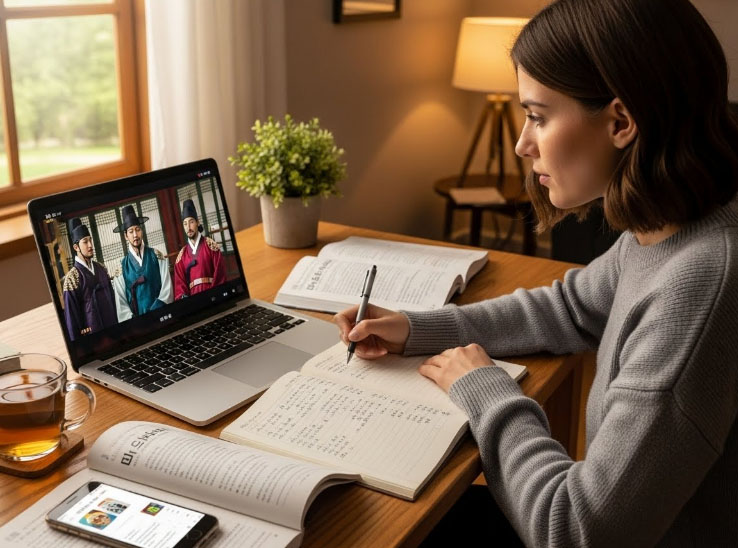
How to Improve Korean Listening Fast
Learning Korean listening quickly is a challenge many learners face after mastering basic vocabulary and grammar. You might be able to read signs and understand textbook exercises, but real conversations—especially at native speed—can feel like a sudden downpour after a sunny morning. I’ve watched countless learners go through this same hurdle, and the good news is that with the right approach, you can strengthen your listening skills much faster than you think. Let’s break it down the way I’d explain it to a friend who’s just arrived in Korea.
Why Listening Is the Hardest Skill at First
Korean pronunciation, rhythm, and speed are quite different from English and many other languages. Because Korean syllables are packed with information and often blend together in natural speech, learners often feel like they recognize words one minute and can’t understand them the next. That’s not a failure—that’s typical. Listening fluency doesn’t pop overnight; it grows with exposure.
Start With the Sound Before the Meaning
A mistake many learners make is jumping straight to subtitles or translations. It’s natural to want to understand the meaning right away, but your ears first need to get used to the sound patterns of Korean. Before tackling long conversations or dramas, start with short, clear Korean audio:
- Short dialogues made for learners
- Audio recordings of basic sentences
- Korean pronunciation guides
At first, focus on hearing sounds, not translating meaning. It’s similar to how babies learn: they hear first, then connect sound with meaning later. Train your ears before training your brain.
Shadowing: Speak as You Listen
Shadowing is a technique where you listen and repeat almost at the same time, imitating intonation, rhythm, and speed. This isn’t just speaking practice—it actually rewires how your brain predicts and processes Korean sounds.
Try this:
Listen to a short sentence, then repeat immediately, trying to match rhythm and tone, even if you don’t fully understand every word yet. Do this three to five times per sentence. It forces your brain to anticipate sounds rather than react to them.
Use Real Media, but Smartly
Korean dramas, variety shows, news clips, and YouTube videos are great because they reflect how Koreans actually speak. But raw media can be overwhelming without structure.
Here’s how to use them effectively:
Watch short clips first with Korean subtitles only.
Watch the same clip again without subtitles.
Listen again while reading a transcript if available.
This layered approach goes from easier to harder, gradually building confidence without overwhelm.
Focus on Content You Like
You’ll improve faster if you enjoy the material. If you love cooking, follow Korean cooking videos. If you like K-pop, listen to interviews or talk shows with your favorite artists. When you care about content, your brain pays better attention and picks up patterns more naturally.
Every learner instinctively avoids boredom. This is how we hack the motivation part of language learning.
Daily Listening Routine Is Key
Consistency outweighs intensity for listening skills. Even 15 minutes a day moves you forward more than two hours once a week. Here’s a simple routine:
Morning:
- 5 minutes of short dialogues for beginners
Afternoon:
- 10 minutes of watching Korean news or talk shows
Evening:
- 10–15 minutes shadowing with audio clips
Short, daily inputs build your listening neural pathways faster than long, infrequent sessions.
Practice With Gradual Difficulty Increase
Start with beginner-friendly materials, then move up little by little:
Beginner Level
- Slow Korean dialogues
- Learner-oriented podcasts
- Audio from language apps
Intermediate Level
- Children’s shows or variety clips
- Vlogs with Korean subtitles
- Slow news segments
Advanced Level
- Regular dramas and talk shows
- Podcasts without subtitles
- Live radio or community shows
The transition from easy to hard should feel gradual, not abrupt.
Train Your Ear to Recognize Patterns
Korean uses many set phrases and expressions that appear repeatedly in everyday conversation. If you can catch the patterns, you’ll understand a lot more without hearing every single word clearly.
For example:
- 어떻게 지내세요 (How are you?)
- 그래요 (That’s right)
- 진짜요 (Really?)
These expressions show up all the time in conversation. Recognizing them instantly helps you follow the flow more easily.
Don’t Get Stuck on Every Word
Many learners get frustrated because they try to understand every word. In real conversations, even native speakers don’t catch everything. Instead, learn to grasp key idea words and the overall meaning. You’ll be amazed how much you understand once you stop chasing every syllable.
Practice With Real People Whenever Possible
Nothing beats real conversation for improving listening. Language partners, study buddies, or local Koreans you meet while traveling are invaluable. Real people speak faster and with variations that recorded audio often doesn’t have. When you listen to real voices, your brain adapts quickly.
Track Your Progress and Celebrate Wins
Listening skill isn’t something you measure every day, but you will notice improvements:
You’ll catch more words in dramas, understand announcements at the subway station, or follow conversations without replaying them. Those are real milestones.
Write down what you could understand last month versus this month. Small wins keep you motivated.
Final Thoughts: Listening Is a Journey, Not a Sprint
Improving your Korean listening fast isn’t about magic tricks. It’s about smart practice: hearing the sounds first, shadowing, using real media with structure, consistent daily exposure, and enjoying the content you listen to. Listening grows when your brain feels safe and curious, not pressured.
Stay patient with yourself. Learning Korean listening is a very human process, not a test you pass overnight. With the right habits and materials, you’ll notice meaningful progress faster than you expect.