
Why Korea Still Needs Foreign Workers in Manufacturing
When most people think of South Korea’s economy, images of glossy city skylines, cutting-edge tech, and bustling streets of Seoul come to mind. But behind the polished surface lies a less glamorous yet critically important reality: Korea’s manufacturing backbone. From autos and semiconductors to shipbuilding and heavy machinery, manufacturing is still central to Korea’s economic success. And despite all the automation and growth, foreign workers remain essential to keep the wheels turning.
As a Korean who lives in a city shaped by factories and industrial parks, I’ve watched how local attitudes toward foreign workers evolved — from curiosity to reliance. Let me explain why Korea still needs foreign workers in manufacturing, in terms that make sense to people thinking about working or living here.
Demographic Challenges: Fewer Young Workers Coming In
Korea’s population is aging rapidly — one of the fastest aging demographics in the world. Young Koreans increasingly prefer office jobs, tech startups, or careers in service industries rather than factory floors. Manual labor doesn’t carry the same appeal it once did.
At the same time, birth rates remain low. Simply put, there are not enough young people entering the workforce to replace those retiring from manufacturing jobs.
That leaves a labor gap. Foreign workers help fill these roles, especially in jobs that are crucial yet physically demanding or less attractive to local youth.
Maintaining Production Levels in Key Sectors
Korea’s global competitiveness in manufacturing is not symbolic — it’s real and export-driven. Companies like Hyundai, Samsung, LG, POSCO, and others form the backbone of global supply chains. To meet demand, factories often operate virtually 24/7 with multiple shifts.
Local workers aren’t disappearing, but they are moving into specialized, high-skill roles faster than replacements are coming in for basic or mid-level manufacturing positions. Foreign workers help maintain output without overburdening the local workforce.
Many factories see foreign workers as part of a balanced workforce — experienced domestic workers paired with motivated foreign staff who help keep production flowing.
Flexible Workforce for Seasonal Peaks
Manufacturing isn’t static. There are seasonal spikes, export pushes, and demand surges tied to global markets. Even with automation, many processes require human intervention — especially skilled manual work, quality checks, logistics, and assembly tasks that aren’t fully automated.
Foreign workers provide the flexibility Korean manufacturers need during busy seasons. They can be hired for longer shifts or additional lines without forcing undue pressure on local workers or disrupting work-life balance.
Cost & Productivity Considerations
Let’s be frank: economics matter. Hiring patterns are shaped by productivity and cost realities.
Foreign workers often help firms manage labor costs without compromising quality or safety. Employers invest in training and compliance, but the reality is that some roles are difficult to fill locally at the wage levels factories can sustainably offer.
That’s not because foreign workers are cheaper in a traditional sense — Korea has minimum wage and labor protections for all. But in practical terms, having a supply of motivated, trainable workers from abroad smooths labor market pressure and keeps productivity stable.
Skill Gaps and Work Ethic Perception
Manufacturing work in Korea typically breaks down into a few categories:
- Basic manual tasks
- Machine operation
- Skilled technical roles
- Quality control and inspection
As the local workforce shifts toward service and tech sectors, some blue-collar tasks see a relative skill gap. Employers often find that foreign workers willing to engage deeply with manufacturing processes learn quickly and bring a level of practical commitment that helps teams stay productive.
From assembly lines to precision inspection, this has become part of why foreign workers are valued — not just as bodies on the floor, but as contributors who adapt and learn.
Cultural Shifts and Workplace Integration
Korea has historically had low rates of immigration compared to other developed economies. But as the need for foreign labor has increased, both workplaces and communities have had to adapt. Cooperative efforts between companies, local governments, and social organizations are supporting language training, cultural orientation, and smoother integration.
This isn’t always perfect, and there are growing pains — but it’s progress that reflects how much the economy is beginning to see foreign workers as partners rather than temporary fixes.
Government Policy and Labor Needs
The Korean government recognizes these demographic and labor pressures. Policies like the Employment Permit System (EPS) are designed to legally regulate the entry of foreign workers into sectors such as manufacturing, agriculture, and construction.
Policy changes often reflect both economic necessity and social responsibility — acknowledging that foreign workers help sustain key industries while also ensuring labor rights and protections.
This balance is crucial if Korea wants to remain competitive while also building a more inclusive society.
Benefits for Foreign Workers Too
The relationship isn’t one-sided. Many foreigners choose Korea because:
- Manufacturing jobs often provide steady, predictable income
- Overtime opportunities can significantly boost earnings
- Some companies offer dorms, meals, and transportation support
- Work experience in Korea enhances resumes globally
For some foreign workers, a period in Korean manufacturing is not just a job — it’s a stepping stone to financial stability, skills acquisition, and international career growth.
A Local’s Honest Take
From my viewpoint living here, people in Korea increasingly see foreign workers as essential collaborators. It’s not about replacing local workers; it’s about completing the labor ecosystem in a way that lets both local and foreign workers thrive.
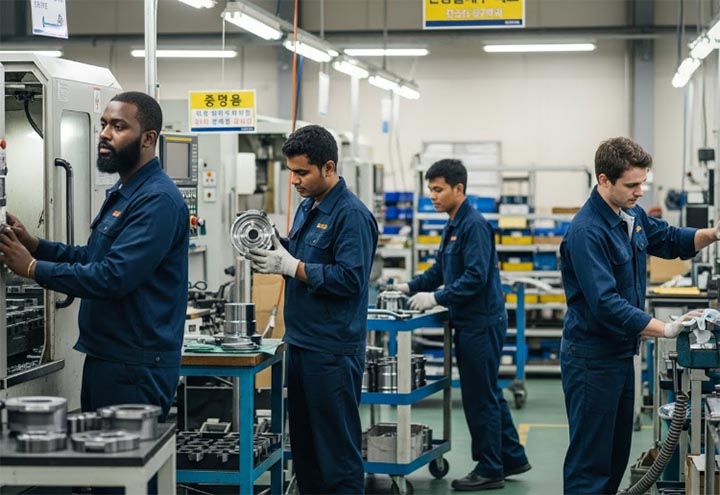
Factories that once operated almost exclusively with Korean workers now include diverse teams of people from Southeast Asia, Central Asia, and beyond. There’s mutual learning — language, culture, work habits — and that exchange enriches both sides.
Final Thoughts
Korea remains a manufacturing powerhouse not because of automation or capital alone, but because of people — and increasingly, people from around the world. Foreign workers help keep factories staffed, maintain export competitiveness, and ease demographic pressure. They offer flexibility, adaptability, and a fresh workforce that complements Korea’s evolving economy.
If you’re thinking about working in Korea, understanding these trends will give you context and confidence. The story of Korea’s manufacturing jobs is not just about machines or numbers — it’s about how a society adapts to change, values hard work, and continues to build a future together with people from around the globe.