
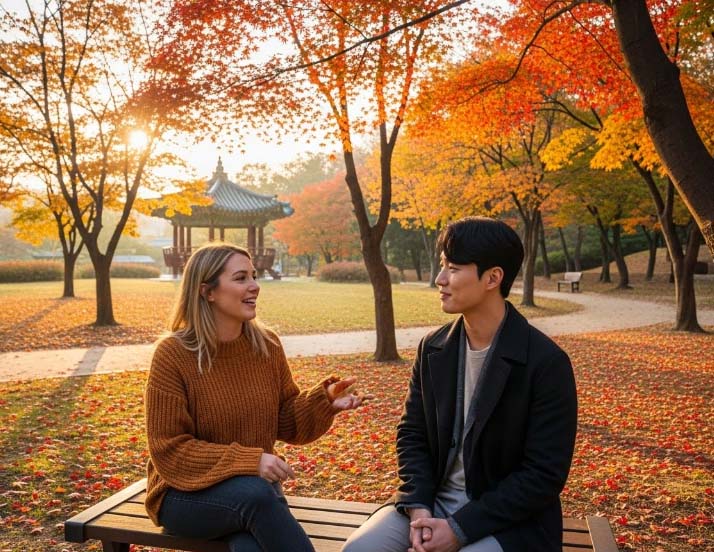
Why Is It Hard to Make Korean Friends?
A Korean Local’s Honest Look at Social Culture
Making friends in a new country can be one of the biggest emotional challenges of relocating, and Korea is no exception. Many foreigners tell me they love the food, the convenience, and the energy of Korean cities—but when it comes to forming deep friendships with Koreans, they hit a wall.
As a Korean woman familiar with both local social norms and the experiences of expats living here, I’ll walk you through the real cultural reasons why Korean friendships can feel elusive at first—and what you can do to bridge the gap.
1. Social Circles Form Early and Tightly
One thing that surprises many foreigners is how established and tight social circles can be.
In Korea:
- People often make close friends in school or university
- Office social groups are strong
- Long-standing neighborhood ties matter
Once friendships form early in life, they become the default social group. Newcomers—especially adults arriving later—can feel like outsiders in these already-woven networks.
This isn’t intentional exclusion. It’s just how social bonds develop here over time.
2. Indirect Communication Makes Initiation Hard
Korean communication style tends to be indirect and contextual.
Koreans often:
- Avoid direct invitations (“Let’s hang out sometime”)
- Use subtler language (“We should do something together”) without a concrete plan
- Wait for everyone to feel comfortable before being explicit
For many foreigners from cultures where inviting someone directly is normal and welcomed, this can feel ambiguous or confusing. It’s not that Koreans don’t want friends—they often express interest in gentle ways that can feel vague at first.
3. Group Culture Is More Common Than Two-Person Bonding
In Korea, especially among younger people, social activity usually happens in groups rather than in isolated pairs.
This means:
- Dinner plans often include several people
- Group chats determine the schedule
- One-to-one hangouts are less common early on
If you’re used to grabbing coffee one-on-one to build a friendship, this can feel unfamiliar.
4. Respect and Hierarchy Can Create Social Barriers
Social hierarchy matters in Korea—age, status, and relationship positioning all influence interaction.
For example:
- Older people are treated with distinct politeness
- Younger people defer to seniors
- Equal-standing peers often form stronger bonds
This can make socializing feel structured rather than spontaneous.
Foreigners may find this confusing if they’re used to very casual, equal interactions right away.
5. Language Is a Real Hurdle
This one may sound obvious, but it’s worth underlining: language matters.
Even among Koreans who study English in school, fluency varies widely. Daily slang, humor, and casual speech can be hard to navigate without Korean fluency.
So even if you’re friendly and outgoing in English, many Koreans may not feel confident enough in language to invite you into deeper social plans.
This is one of the biggest practical barriers to friendship, not just a cultural one.
6. Busy Schedules and Work Culture
Korean work and study culture is intense.
Many people juggle:
- Long work hours
- After-work dinners and obligations (hoesik)
- Study or side classes
- Family commitments
When free time is limited, people are selective about social invitations. This makes spontaneous hangouts rarer and plans more structured.
7. Comfort Zones and Familiarity
Like many societies, Koreans feel most comfortable with people who share:
- Background
- Language
- Cultural references
It’s not that Koreans are closed—far from it. But familiarity breeds comfort, and unfamiliarity naturally creates hesitation.
It takes time for both sides to reach a comfort level where deeper conversations emerge.
8. Social Platforms and Location Can Help
Thankfully, Korea has tools and spaces that make forming connections easier:
- Language exchange meetups
- International clubs and expat groups
- University student societies
- Hobbies and interest groups (hiking, art, gaming)
These environments blend Korean and foreign participants, making initial social connection easier.
9. Generational Differences Matter
Younger Koreans, especially those in their 20s and 30s, are generally:
- More globally oriented
- More comfortable with English
- More open to cross-cultural friendships
Older generations may be more polite and respectful, but less inclined to casually invite a foreigner into the inner social circle right away.
Both are wonderful people—it’s just different social pacing.
10. Patience and Mutual Effort Pay Off
Here’s the good news: once a friendship clicks in Korea, it tends to be deep and meaningful.
Many expats who stay long enough find that:
- Invitations become more personal
- Group hangouts turn into one-on-one time
- Cultural exchange becomes mutual
Korean friendships often go from polite acquaintance to trusted friend once mutual effort and time build trust.
Practical Tips to Build Friendships as a Foreigner
If you want Korean friends — and not just polite acquaintances — try these approaches:
Be proactive:
Extend authentic invitations rather than waiting for someone to initiate.
Learn the language:
Even basic Korean makes a huge difference socially.
Participate in group activities:
Classes, sports, clubs, meetups — they’re social accelerators.
Be curious about culture:
Ask questions, share your culture — mutual curiosity builds connection.
Understand pacing:
Korean friendships often unfold gradually rather than instantly.
Final Thoughts from a Korean Local
Making close Korean friends is challenging if you approach it the same way you would in your home culture. But it’s absolutely possible — and incredibly rewarding — if you understand the cultural rhythms.
Korean friendships are built on:
- Respect
- Shared experiences
- Gradual trust
- Mutual effort
Once you’ve crossed that initial bridge, your Korean friends become warm, loyal, and deeply supportive — just like anywhere else in the world.