
Where to Exchange Currency in Seoul
A Local Korean Woman’s Complete Guide
If you’re flying into Seoul for the first time, one of the first practical questions is: where should I exchange money? South Korea is a modern, card-friendly country, but having Korean won (KRW) on hand — especially for taxis, street food, markets, and smaller shops — makes your trip much smoother. As someone who lives in Seoul and travels here often, let me walk you through the most reliable, cost-effective, and convenient places to exchange currency without getting lost or paying too much in fees.
1. Incheon International Airport — Convenient, But Not Always the Best Rates
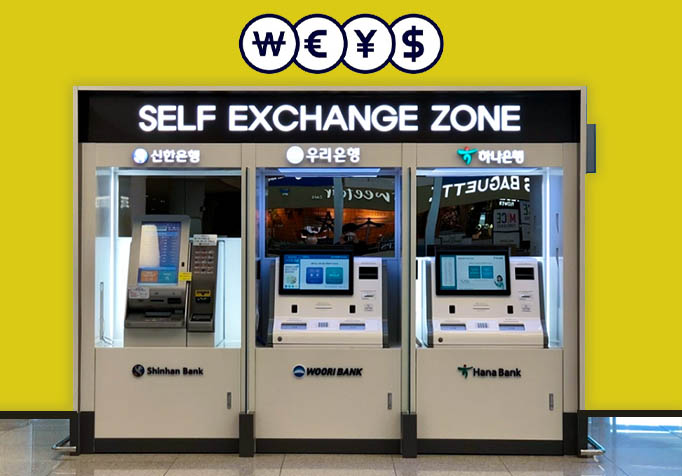
Most travelers will land at Incheon International Airport, and yes — you can exchange money there. There are multiple foreign exchange counters in both terminals.
Why people use it:
- It’s immediately available when you arrive
- Staff understands tourist needs
- Helpful if you need a small amount right away
However: Airport exchange rates are usually less favorable than what you’d find in the city. If you only need a little cash for transportation or snacks, go ahead and exchange a small amount. But for the bulk of your money, it’s usually worth waiting until you get into Seoul proper.
2. Seoul’s Major Banks — Safe and Official
You’ll find branches of major Korean banks throughout Seoul — most have foreign exchange services. Some of the well-known ones include:
- Kookmin Bank (KB)
- Shinhan Bank
- Hana Bank
- Woori Bank
These banks offer official rates and are often better than airport counters. In many cases, you’ll also see “FOREIGN EXCHANGE” signs in English.
Tips for using banks here:
- Exchange counters are usually open during normal business hours (roughly 9:30–16:30, weekdays)
- Bring your passport — banks will ask for it to process the exchange
- Rates can vary slightly between banks, so walking a few blocks to compare can pay off
Banks are a reliable option, especially if you want transparency and official documentation for large sums of cash.
3. Seoul Currency Exchange Shops — Often the Best Rates
If you want better exchange rates than banks but still want professional service, look for specialized currency exchange shops around central areas. These places often offer lower fees and better mid-market rates.
Some of the most traveler-friendly areas with plenty of exchange shops include:
Myeongdong
This bustling shopping district has many dedicated exchange counters along the main streets and side alleys. The competition keeps rates more favorable.
Namdaemun Market / Hoehyeon Station
This area is known among locals for some of the best retail exchange rates in Seoul. Many shops post their rates in big digits so you can compare easily.
Dongdaemun
Another central district with multiple exchange counters near shopping complexes and subway exits.
Tips for using private exchange shops:
- Always check the rate board before you commit
- Ask about any hidden fees or commission — most shops charge none, but it’s good to confirm
- Have your passport handy — it’s required for the transaction
4. ATMs: Easy, But Watch the Fees
ATMs are everywhere in Seoul — convenience stores like CU, GS25, 7-Eleven, subway stations, and bank branches all have them. Many accept international cards (Visa, Mastercard, PLUS, Cirrus).
Why cards can be handy:
- You typically get rates close to the interbank rate
- Big banks’ ATMs often have smaller withdrawal fees than your home bank’s international charges
But watch out for:
- Bank and ATM operator fees — sometimes multiple fees stac
- Daily withdrawal limits
- Dynamic currency conversion offers (opt to be charged in KRW instead of your home currency)
Using ATMs is usually easiest for topping up your cash as you go rather than exchanging large amounts upfront.
5. Hotels and Tourist Exchange Counters — OK in a Pinch
Some big hotels and tourist information centers offer currency exchange, but these tend to have poorer rates compared to banks or exchange shops. They’re convenient if you’re in a rush or late arriving, but not ideal for large sums of money.
6. Tips Locals Use to Get Better Rates
Compare rates quickly
Walk a block or two and glance at two or three shops before you exchange. Even small differences add up.
Avoid weekend or holiday exchanges
Rates can be less competitive when markets are closed or slow.
Exchange what you need first, then reload with ATMs
You don’t need to bring tons of cash. Many places in Seoul happily take cards — especially credit/debit — and you can get more won from ATMs when needed.
Keep small bills
Taxi drivers, street vendors, and markets sometimes don’t have much change for large bills.
Where Locals Go (Hidden But Trusted)
If I have friends visiting, I usually direct them to mid-city areas like Euljiro, Chungmuro, or Jongno where currency exchange shops compete fiercely and offer some of the most transparent, traveler-friendly rates. They’re often slightly off the typical tourist routes, but worth a short walk.
A Note on Safety
South Korea is generally safe, and currency exchange is straightforward. Still:
- Only exchange money at official counters with posted rates
- Count your cash before you leave the counter
- Keep the receipt until you’re sure you don’t need to reconvert unused won
Counterfeit notes are rare, but checking before you leave the counter gives you peace of mind.
Final Local Verdict
Here’s my honest ranking for first-timers:
- Private currency exchange shops (Myeongdong / Namdaemun) — Best rates
- Banks in Seoul — Reliable and fair
- Airport counters — Convenient for a small amount
- ATMs — Good for topping up
- Hotels / tourist desks — Last resort
If you plan wisely, you can spend more time enjoying Seoul and less time worrying about money exchange.