
Why K-pop Choreography Is So Powerful
The Hidden Code
Annyeonghaseyo, dance enthusiasts! You’ve watched the music videos and the live stages, and you feel the raw energy. K-Pop choreography isn’t just movement; it’s a disciplined, powerful, and utterly captivating visual language that transcends language barriers. It’s what makes K-Pop performances truly cinematic.
But why is the choreography so much more impactful than what you typically see in Western pop? As your Korean insider, I’m here to give you the honest breakdown of Why K-pop Choreography Is So Powerful, analyzing the intense training and the meticulous strategy behind every movement.
1. The Power of Absolute Synchronization (The “Kalgunmu” 칼군무)
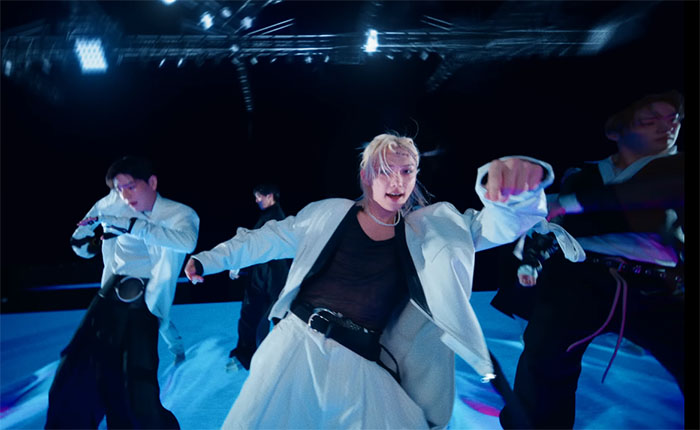
The single most defining characteristic of K-Pop performance is kalgunmu (칼군무), which literally means “knife-like group choreography.” This is where the true power lies.
Precision Over Individuality: While Western artists often prioritize individual stage presence and improvisation, K-Pop prioritizes absolute unity. Every angle, every hand movement, and every beat drop is performed simultaneously by every member.
The Visual Illusion: This level of synchronization creates a powerful visual illusion. When dozens of bodies move as one, it registers in the brain as a complex, mesmerizing feat that conveys strength, discipline, and sheer professionalism.
2. The Training System: Built for Endurance
The relentless power of K-Pop choreography is rooted in the industry’s notoriously intense training system.
Muscle Memory: Idols train for years, practicing the same routines thousands of times. This repetition ensures that the demanding choreography is executed not just correctly, but with the full stamina and intensity required for a high-energy live stage, where they also have to sing and rap.
The Endurance Factor: K-Pop routines are often several minutes long and utilize the entire body, requiring a level of physical conditioning akin to that of professional athletes. This sustained energy is what truly projects power to the audience.
3. Storytelling Through Formations (The “Killing Part”)
K-Pop dance is designed to be visually dynamic, utilizing group formations to tell the song’s story.
The Formation Changes: Groups constantly shift their formation (the “F-formation,” the “arrow,” the “wave”) to highlight different members and create visual drama. This continuous movement keeps the viewer engaged, always looking for the next spatial surprise.
The Killing Part: Every choreography has a “killing part”—an iconic, instantly recognizable movement (often less than three seconds long) designed to be highly memetic and easily shared on platforms like TikTok or Instagram. This move is the song’s visual signature and drives virality.
4. Borrowing from Global Genres (The Fusion)
K-Pop choreographers are world-class professionals who fuse diverse global dance styles into a unique hybrid product.
The Blend: You see elements of hip-hop (for sharpness and grounding), contemporary dance (for fluidity and emotion), and even martial arts or ballet (for specific movements). This stylistic fusion keeps the choreography feeling fresh, complex, and technically demanding.
K-Pop choreography is powerful because it is engineered for perfection, designed for virality, and executed with the unified discipline of a professional ensemble. It’s not just a dance; it’s an art form forged in effort and precision.