Multicultural Korea Explained for Global Readers
Understanding Korea’s Cultural Shift Beyond Homogeneity
Korea is changing — but not in the way many people expect. For decades, South Korea has been globally known as a remarkably homogeneous society — a place where most people share the same ethnic background, language, and cultural norms. That image still exists in many textbooks and travel sites, but the reality on the ground is increasingly nuanced. Today, Korea is becoming more multicultural in ways that are reshaping communities, schools, workplaces, and everyday life for both Koreans and foreign residents.
In this post, I’ll explain this transformation from the inside — as someone born and raised here, and someone fascinated by how Korea is gradually opening up to the world.
Why ‘Multicultural Korea’ Matters Now
For many international readers, the phrase “multicultural Korea” might sound surprising. Even now, the idea of a multicultural society is more commonly associated with countries like Canada, the United States, or Australia. But Korea’s society is rapidly evolving due to a combination of demographic and economic forces.
South Korea’s birth rate is one of the lowest in the world, which means fewer young people are entering the workforce and contributing to future growth. Meanwhile, more people are coming to Korea for work, study, and family reasons — including international marriages and long-term residency.
According to government estimates, the percentage of foreign residents is expected to grow. At the time of writing, over 4% of the population are foreign residents, and projections suggest this could rise further by 2040.
This isn’t a massive number compared with some Western countries, but in a society historically rooted in the idea of a single national ethnicity, it’s significant.
What ‘Multicultural’ Really Means Here
When Koreans talk about “multicultural society” (다문화 사회), they often refer to the presence of diverse cultural backgrounds — people from different countries, languages, and family structures living together. It includes:
- Foreign workers in factories, farms, and service industries
- Students from around the world studying at Korean universities
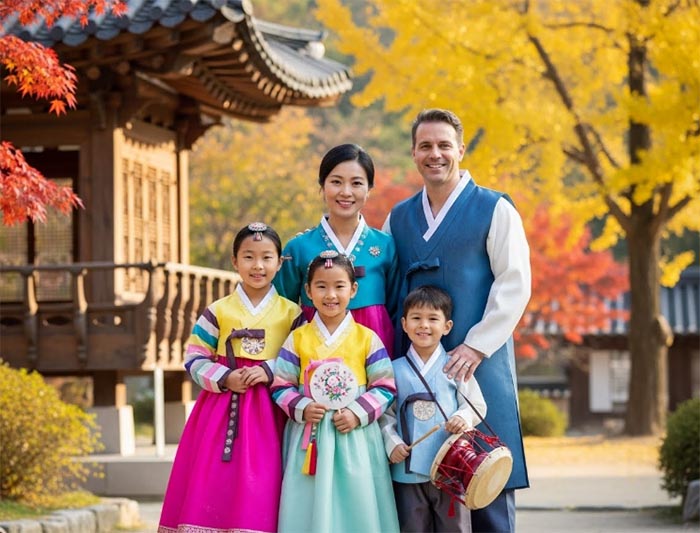
- International marriages and the children from those families
- Long-term residents whose children are growing up bilingual
At first glance, these changes may seem small. But they have real social and cultural implications, especially as younger generations grow up alongside peers with mixed backgrounds and different languages.
Facing Reality — The Challenges of Integration
Let’s be honest: becoming a multicultural society isn’t just a matter of statistics. It involves real people with real struggles.
Many foreign residents in Korea — whether they came for work, marriage, or study — face barriers. Language is often the biggest one. If you don’t speak Korean well, everyday life becomes harder: navigating official paperwork, communicating with teachers, or even grocery shopping can be confusing. This isn’t a unique experience worldwide, but in Korea the expectation to assimilate quickly can be intense.
There’s also the issue of social acceptance. Surveys show that a majority of Koreans recognize the economic necessity and benefit of a multicultural society, but attitudes vary depending on context. Some people are fully comfortable with diversity, while others may still hold traditional views about national identity.
Daily Life — What It Feels Like on the Ground
So what does multicultural life actually look like in Korea?
In the Classroom
In schools around the country, it’s now common to encounter classmates from diverse backgrounds. Some schools have programs specifically designed to support students who speak another language at home, offering after-school Korean classes or community mentoring.
Teachers and students often note that kids with diverse backgrounds bring new perspectives — and learning styles — to the classroom. At the same time, educators are aware that support is still evolving, and there’s a lot more work to be done to ensure every child feels included.
In the Workplace
In cities like Ansan or Gwangju, foreign workers form strong, visible communities. These cities are often described as Korea’s most multicultural urban centers. You’ll find markets selling foods from around the world, international cultural festivals, and community centers offering support services.
However, work conditions and legal protections for migrant workers can vary. Advocacy groups continue pushing for better enforcement of labor rights and anti-discrimination measures, a topic of active debate within Korea.
At Home and in Social Circles
Multicultural families — including couples where one partner is from abroad — are part of everyday life, especially in smaller towns where young people have married partners from Southeast Asia or other regions. These families are often tight-knit and contribute richly to local culture, cuisine, and social networks.
But they also face challenges: language gaps, social misunderstandings, and sometimes stereotypes. Korea’s national conversation about these issues is growing, which is itself a sign of social transformation.
Government Efforts to Support Multicultural Growth
To foster integration, the Korean government and local municipalities offer support services for foreign residents. These include:
- Korean language courses
- Job support and employment centers
- Counseling and legal services
- Cultural events to celebrate diverse traditions
Such programs are designed to make daily life easier for non-native residents — and to promote mutual understanding between communities.
Still, policy experts argue that integration needs to go both ways. Efforts cannot just focus on helping foreigners adapt; Korean society must also adapt to becoming more inclusive. Knowing and valuing different cultural perspectives is essential for genuine cohesion.
Why This Matters to You
As global readers interested in Korea, understanding multicultural dynamics gives you a deeper view of real Korean life — beyond K-pop, kimchi, and temple photos. It’s about how everyday people live, interact, and build communities in a changing world.
Whether you’re planning to travel here, work, study, or simply learn more about Korean society, seeing Korea through the lens of multiculturalism helps you understand:
- How Korea is responding to global trends
- What cultural diversity means in an East Asian context
- How traditional and modern forces shape social identity
Korea’s multicultural shift reflects broader global themes: migration, identity, community, and acceptance. Seeing these changes from the inside enriches your perspective as a global reader and connects you to stories beyond stereotypes.
Looking Forward: A More Diverse Korea
Korea’s multicultural journey feels new, sometimes awkward, but inherently human.
We’re seeing young people grow up in mixed-heritage families, meet classmates from diverse backgrounds, and discover new foods and languages in their neighborhoods. Communities are adopting new traditions, festivals are blending cultures, and even Korean cuisine is evolving with flavors from around the world.
This isn’t just a demographic trend — it’s a cultural evolution. And while there are challenges, there is also a growing belief that diversity enriches our social fabric rather than weakening it.
As Korea continues to open its doors — literally and figuratively — the story of multicultural Korea becomes more interesting, more complex, and more essential for anyone who wants to truly understand this remarkable country.