How Strict Is Korean Workplace Culture in Factories? What Foreign Workers Should Expect
If you are considering a factory job in Korea, you might be wondering one thing above all else. Just how strict is the workplace culture really?
As a Korean local, I can tell you this honestly. Factory culture in Korea is structured, rule focused, and sometimes intense, but it is not as scary as rumors make it sound once you understand how it works.
Let me walk you through the reality, not the stereotypes.
Yes, Korean Factory Culture Is Rule Oriented
Factories in Korea run on clear rules.
Start times matter. Safety rules are taken seriously. Instructions are expected to be followed exactly. This structure exists because factories deal with machines, deadlines, and group production.
For foreigners, this can feel strict at first, but the rules are usually simple and consistent.
Hierarchy Is Real, Even on the Factory Floor
Korean workplaces are hierarchical, and factories are no exception.
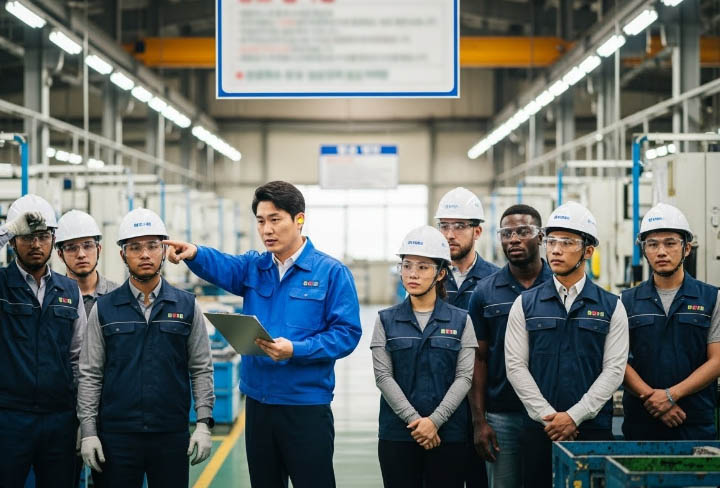
There is a clear line between managers, team leaders, senior workers, and new employees. You may notice that older or more experienced workers give instructions rather than suggestions.
This is not personal. It is cultural and practical. Respecting hierarchy makes daily life much smoother.
Punctuality Is Non Negotiable
Being late is one of the fastest ways to stand out in a bad way.
Factories operate on tight schedules, so arriving even a few minutes late can disrupt the whole line. Most factories expect workers to be ready before the shift starts, not exactly at the start time.
If you value flexibility with time, this part can feel strict.
Work First, Small Talk Later
Factory culture is task focused.
There is less casual chatting during work hours compared to office jobs. Efficiency matters more than conversation. This does not mean coworkers are unfriendly. It just means work comes first.
Once breaks or lunch time arrive, the atmosphere often softens.
Communication Style Can Feel Direct
Instructions in Korean factories are often short and direct.
To foreigners, this may sound blunt or even harsh at first. In most cases, it is not emotional. It is simply a fast way to communicate in a busy environment.
Managers usually care more about results than tone.
Safety Rules Are Taken Seriously
This is one area where strictness is a good thing.
Protective gear, machine handling rules, and safety checks are enforced more than before. Factories know accidents lead to serious legal trouble.
If someone corrects you on safety, it is for your protection, not control.
Foreign Workers Get Some Flexibility
Here is the good news.
Many factories understand that foreign workers come from different cultures. Managers may explain rules more carefully or be patient with language issues, especially at the beginning.
Effort and attitude matter more than perfection.
Is It Emotionally Strict or Just Structured
Most of the time, it is structured, not emotionally harsh.
If you do your job well, show respect, and follow basic rules, you are usually left alone. Korean factories value reliability more than personality.
Drama is rare. Consistency is rewarded.
How Foreigners Usually Adapt
The first month is the hardest.
After that, many foreigners say factory work feels predictable and even comfortable. You know what is expected every day, and there are few surprises.
For some people, this structure is actually a relief.
Final Thoughts from a Korean Perspective
Korean factory workplace culture is strict in rules, not in cruelty.
It demands discipline, respect, and consistency, but it also offers clarity and stability. If you understand the cultural logic behind the rules, it becomes much easier to adapt.
Knowing what to expect makes all the difference.