
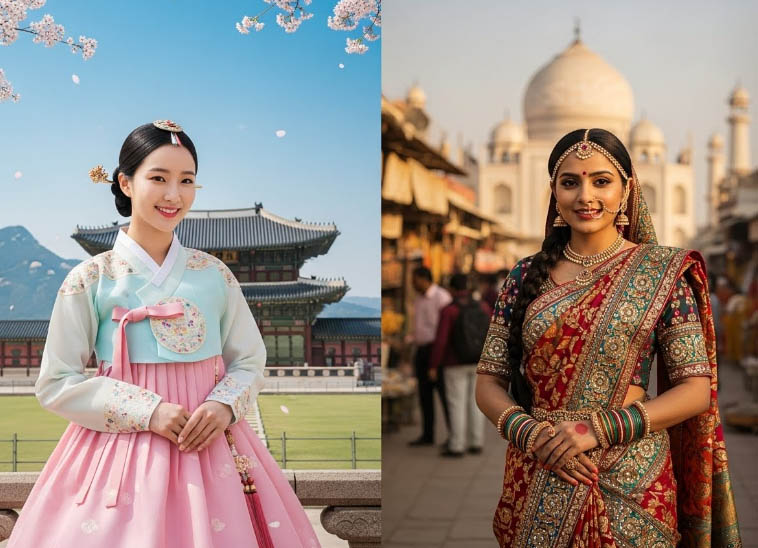
Cultural Differences Between India and Korea: A Local Korean’s Insightful Guide
If you’ve ever talked to a Korean friend about India or an Indian friend about Korea, you know the reactions often go beyond curiosity — they go straight to “Wait, what?” Both India and Korea are rich, long-established cultures with deep traditions, but how that richness shows up in daily life can be surprisingly different. As someone who lives in Korea and interacts with Indian visitors, students, and professionals regularly, I can tell you that understanding these differences helps you feel less like a foreigner and more like someone who appreciates why things feel so familiar and yet so different.
Let’s walk through the core cultural differences you’re most likely to notice when comparing India and Korea — not as judgment, but as context you’ll be glad you know.
Communication Style: Direct vs. Indirect
One of the most striking contrasts is how people communicate.
In many Indian cultures, communication tends to be:
- Expressive
- Emotional
- Direct in personal settings
Koreans, on the other hand, often communicate more indirectly, especially in formal or unfamiliar situations. Harmony matters here. You’ll hear phrases like “Let me think about it” or “That could be difficult,” which often mean “No” or “I’m not comfortable,” even if the words themselves seem polite.
The Indian style teaches “say what you feel,” while the Korean style leans toward “say what maintains peace.” Neither is more correct; they just reflect different social priorities.
Respect and Hierarchy: Age and Position Matter
In Korea, age and position shape daily interactions more than many visitors expect.
From the moment two Koreans meet, the seniority in age defines:
- How you speak
- When you start talking
- How you serve tea or pour drinks
In India, respect for elders is also deeply rooted, but it often mixes with warmth and familiarity. In Korea, respect can feel more structured and ritualized — almost like a social language you learn as you go.
For Indians, this structured hierarchy may feel both familiar and formal. In Korea, age determines speech level, seating order, and even how a team interacts at work.
Family and Social Life: Togetherness with Different Rhythm
Both India and Korea value family, but daily life feels different.
In India:
- Extended family often lives close or together
- Loud, lively gatherings are the norm
- Family decisions are collective and social
In Korea:
- Nuclear families are the norm
- Family meals tend to be quieter
- Harmony and subtle cues shape interaction
When Indians visit Korea, they sometimes wonder if Koreans are shy or quiet. In reality, emotional expression is just calibrated differently. A Korean parent may love their child deeply, but they show love through actions and responsibility, not always loud words.
Food Culture: Flavor Meets Structure
Food is where cultural differences are deliciously obvious.
In India:
- Spices, curries, and aromatic diversity define meals
- Eating is a social event
- Sharing food and passing bowls is common
In Korea:
- Shared dishes are also common, but flavor profiles are different
- Meals center on balance — spicy, savory, fermented, fresh
- Banchan (side dishes) appear at every meal, encouraging communal tasting
Korean food can be spicy, but it’s usually consistent within its own palate. Indian visitors often find joy in familiar preferences and curiosity in new combinations.
Work and Daily Routine: Structure vs. Flexibility
Korea’s work culture is famously structured and punctual. Schedules are strict, deadlines matter deeply, and sticking to the plan is expected.
In India, routines can be more flexible and adaptive. Schedules matter, but:
- Meetings can stretch
- Social interaction bleeds into work rhythm
- Adaptability is key
Koreans are efficient planners. Indians are efficient improvisers. Seeing both sides helps you understand why workplaces and daily life feel so different.
Social Norms and Public Behavior
When you walk down a train platform in Korea, you’ll notice:
- Quiet conversations
- People lining up patiently
- Phones on silent more often than not
In India:
- Platforms are vibrant
- Conversations are loud and lively
- Family and friends gather and move together
Neither behavior is “better” — just different expressions of social comfort.
In Korea, the unspoken rule is “don’t disturb others.” In India, the unspoken rule is “feel free to connect with others.”
Festivals and Celebrations: Spiritual and Seasonal
Both cultures celebrate deeply rooted traditions, but the styles differ.
Indian festivals often involve:
- Color
- Music
- Community gatherings
- Days filled with extended family
Korean celebrations, whether lunar New Year (Seollal) or Chuseok (harvest festival), emphasize:
- Family rituals at home
- Shared meals
- Respectful remembrance of ancestors
Korean holidays can feel quieter and more reflective, but no less meaningful.
Concept of Time: Punctuality vs. Flexibility
Indians often view time flexibly. Meetings, weddings, gatherings may start later than scheduled — and that’s accepted culturally.
In Korea, punctuality is a sign of respect. Being on time — especially for work, formal events, or public transport — is essential. If something is scheduled for 10 AM, arriving at 9:55 is normal. Arriving at 10:05 might raise eyebrows.
Education and Learning Culture
Both India and Korea place a high value on education, but the approach differs.
Korea’s education environment focuses on:
- Test results
- Structured after-school academies (hagwons)
- Group harmony in classrooms
In India, you’ll see:
- Coaching centers with intense exam preparation
- Individual achievement highly emphasized
- Debate and articulation encouraged
Both systems are rigorous, but the philosophies behind learning and achievement take different paths.
Religion and Belief Systems
India’s religious diversity is part of daily life — temples, rituals, festivals, and spirituality are visible everywhere.
Korea has its own spiritual landscape — Buddhism, Christianity, Confucian ritual practice — but religion is often more private and less visibly woven into everyday public life.
Visitors from India sometimes miss the shared spiritual markers at first. In Korea, respect for tradition often shows up in etiquette rather than overt ritual.
How to Appreciate Both Cultures Honestly
The best way to understand cultural differences is not to judge them, but to see them as lenses — ways people have learned to live with each other over generations.
Indians and Koreans both value:
- Respect
- Community
- Family
- Hard work
- Tradition
But the expression of these values differs, giving each culture depth and richness. When you travel, work, or live in a culture different from your own, the surprises are not obstacles — they’re invitations to understand human diversity more deeply.
Final Thoughts from a Korean Local
Comparing India and Korea is like comparing two beautiful novels written in different languages. The themes may sometimes seem similar, but the style, rhythm, and expression vary.
If you’re Indian and curious about Korea — or Korean and curious about India — remember this:
Differences widen understanding, not distance. The more you learn, the more you see the shared human values beneath different habits.
And that’s the true heart of cultural exchange.