
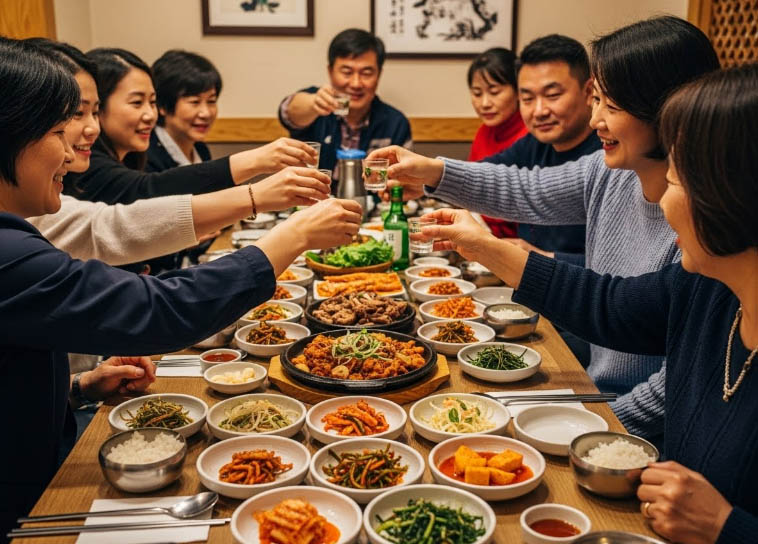
Why Are Company Dinners Mandatory in Korea?
A Korean Local’s Honest Take for Foreign Workers
If you’ve ever heard about Korean company dinners — or hoesik (회식) — you might be wondering whether they’re really mandatory, why they seem to happen so often, and what’s behind them. As a Korean woman who has spent years navigating office culture both as an employee and as a friend to expats, I’ll explain why company dinners are such a big deal here, what they really mean, and how to participate without feeling lost.
Let’s strip away the stereotypes and look at corporate dinners through the lens of everyday Korean workplace life.
Company Dinners: Mandatory or Mostly Expected?
First — are they truly mandatory?
There’s no law saying you must attend a company dinner. But in practice, many Korean workplaces treat hoesik as strongly expected. Skipping one without a good reason can sometimes be interpreted as lack of team spirit or disinterest in bonding with colleagues.
So while not legally required, the social expectations make them feel mandatory — especially for those new to Korea or working in traditional corporate environments.
The Cultural Logic Behind Company Dinners
1. Team Harmony Over Individualism
In Korea, group harmony (hwa-hap) is a core cultural value. Work isn’t just a series of tasks — it’s also relationships.
Company dinners are where:
- Hierarchies relax a bit
- People share stories and laughs
- Newcomers get welcomed and observed
In many cultures, socializing outside work is personal. In Korea, it’s social glue.
2. Building Trust Outside the Office
Within the office, things can be formal, structured, and hierarchical. But around the table — with food, drinks, and a relaxed atmosphere — colleagues see sides of each other that don’t show up in meetings.
This matters because:
- People are expected to get along
- Trust strengthens cooperation at work
- Informal chats can resolve formal tension
So the dinner isn’t just dinner — it’s teamwork training through food.
Typical Structure of a Korean Company Dinner
A usual hoesik night might go like this:
- Dinner (usually Korean food) — grill, stews, shared plates
- Soju and beer rounds — “one shot for seniors” and shared pouring
- Second place (2차) — moving to another bar or lounge
- Karaoke (noraebang) — optional, but very popular
Each stage brings different kinds of interactions — food for comfort, drinks for loosened conversation, 2차 for unguarded fun.
If you’re new, early dinners help you learn names, roles, and office dynamics faster than months of meetings ever could.
Why It Feels “Mandatory” to Many Foreigners
Foreign workers often say:
“It feels like I have to go even if I’m tired.”
“My boss expects me to participate.”
“Saying no feels awkward.”
Here’s why:
1. Respect for Hierarchy
Older or senior coworkers expect respect. Joining a dinner shows you value the team and understand social hierarchy. Skipping often — especially without a good reason — can be viewed as disrespectful.
2. Indirect Communication
Koreans often avoid direct confrontation. A boss won’t always say “you must attend”, but:
- Invitations are implied
- Presence is noticed
- Absence without clear explanation stands out
If you’re not aware of cultural nuance, it can feel surprisingly insistent.
Is It Only About Drinking? Not Exactly
While alcohol (especially soju and beer) is common, company dinners aren’t about drinking per se. They’re about:
- Relaxing social barriers
- Showing personal sides
- Building relationships that make collaboration easier
- Celebrating small wins together
Some foreigners thrive in these settings; others find it exhausting. Both reactions are valid — it’s just part of learning the local rhythm.
Modern Changes: Company Dinner Culture Is Evolving
Things are gradually changing, especially among younger companies and international teams:
- More emphasis on choice — attendance isn’t always expected
- Casual gatherings instead of formal dinners
- Alcohol-free options and early finish times
- Respect for personal time and work-life balance
Startups, global companies, and young teams often treat social meals as optional rather than compulsory.
So if you work in a multinational office or a newer Korean company, you might find dinners are simply social options, not obligations.
How to Navigate Company Dinners as a Foreigner
Here are practical tips that help you participate confidently:
1. Observe and Follow the Lead
Watch how colleagues interact — who pours for whom, how toasts are made, and how seniors are addressed. These small social cues go a long way.
2. Enjoy Without Pressure
You don’t need to drink excessively. Pouring for others and joining conversations shows good will even with modest consumption.
3. Communicate Clearly If You Can’t Attend
When you have a legitimate reason (health, family), a polite explanation — especially in advance — is appreciated in Korean corporate culture.
4. Use It as a Chance to Learn Culture
Instead of seeing it as an obligation, see it as cultural immersion time. You’ll learn more about team norms in a few hours here than a week of office hours.
Company Dinners: A Cultural Bridge, Not Just a Meal
In Korea, social gatherings like hoesik are less about food or alcohol and more about people. They’re opportunities to:
- Connect hearts, not just tasks
- Understand hierarchy and respect
- Foster trust beyond the daily grind
For many Korean employees, these dinners are treasured memories — places where mentorship, laughter, teamwork, and even lifelong friendships are forged.